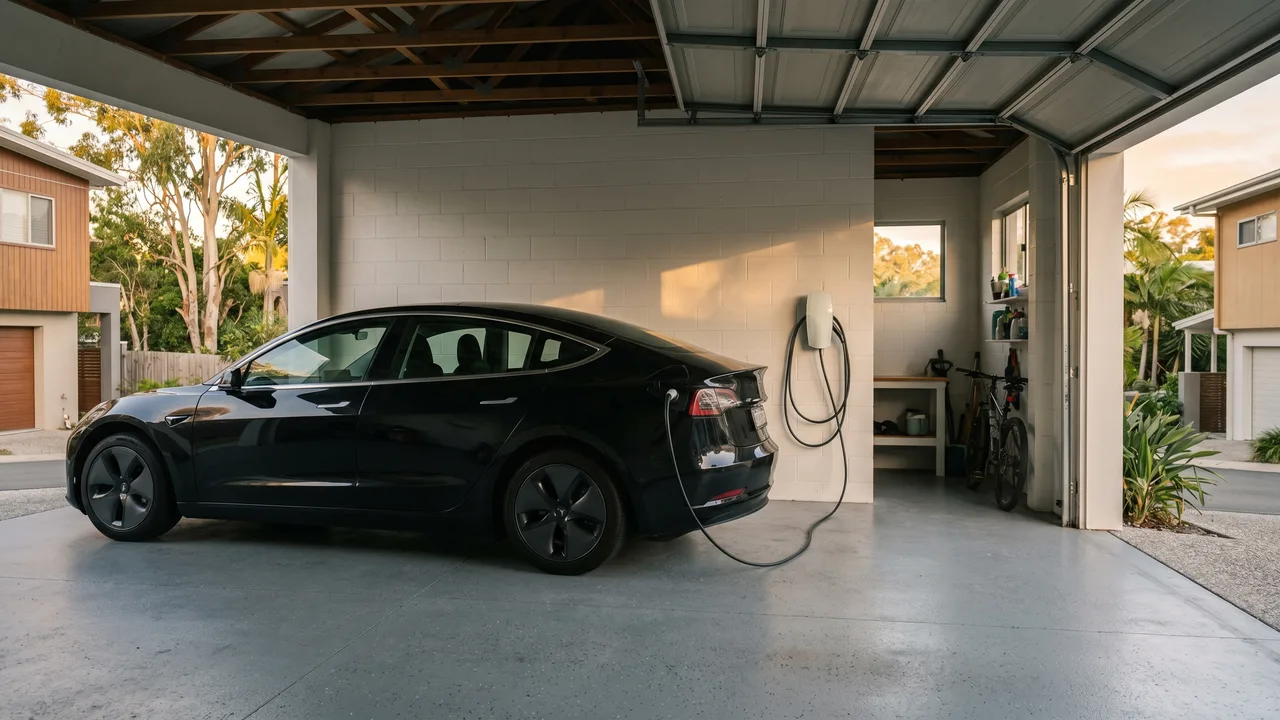
EV Charger Installation guide
Is three-phase power worth it just for EV charging at home?
For most Brisbane homeowners, single-phase power with a good Level 2 charger is all you need for home EV charging. Three-phase is genuinely worth it in specific situations, but upgrading just for the sake of faster charging is often overkill and rarely the cheapest path.
That said, "worth it" depends on your car, your daily driving, and what your switchboard already has. Let's work through it properly.
What single-phase and three-phase actually mean for EV charging
Your home draws power from the grid through either one phase (single-phase) or three phases (three-phase). Most older Queensland homes, including a lot of the post-war and Queenslander-style housing in suburbs like Carseldine, Bald Hills, and Albany Creek, were built with single-phase supply. Three-phase supply was traditionally reserved for homes with large electric motors, commercial ovens, or workshop equipment.
For EV charging, the difference is speed:
- A single-phase 32A circuit (the typical Level 2 home charger setup) delivers roughly 7.2 kW of charge power.
- A three-phase 32A circuit delivers roughly 22 kW.
So on paper, three-phase charges about three times faster. An EV with a 60 kWh usable battery goes from near-empty to full in about 8-9 hours on single-phase, or roughly 3 hours on three-phase, assuming the car's onboard charger can accept the full rate.
That last point matters. We come back to it below.
The catch: your car's onboard charger sets the ceiling
Every EV has an onboard AC charger (the unit inside the car that converts AC grid power to DC for the battery). That onboard charger has a rated maximum input.
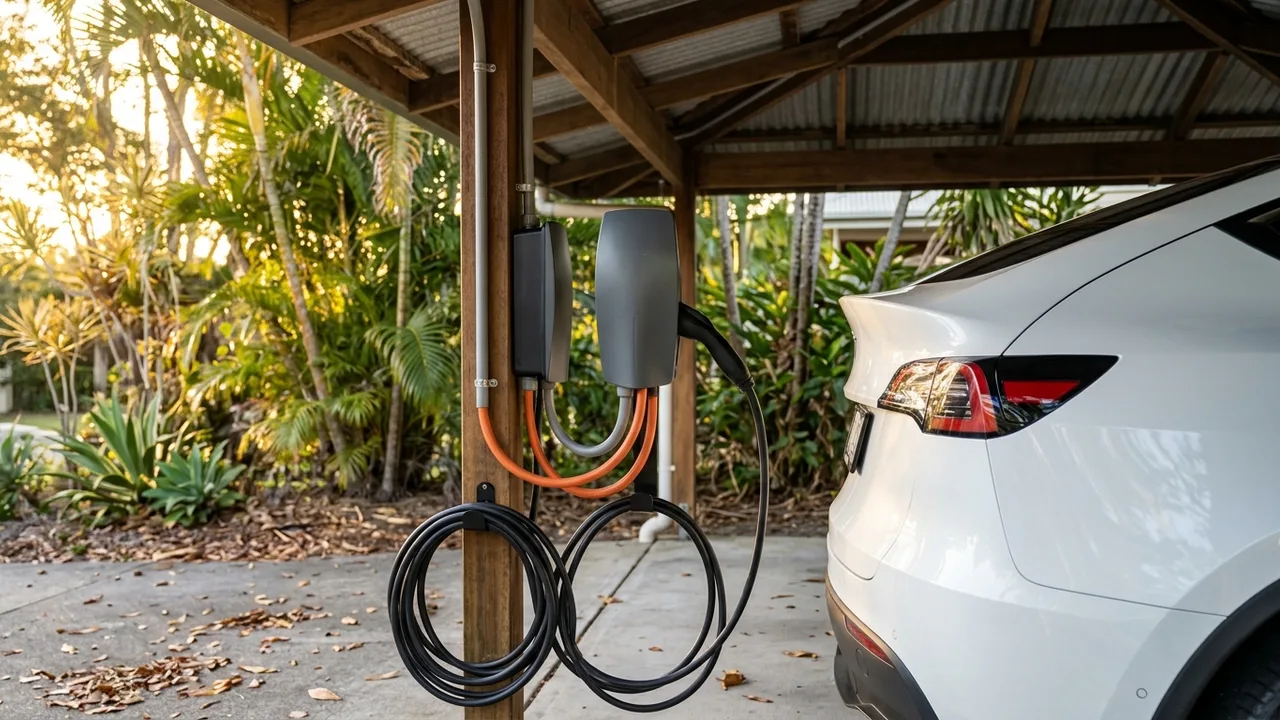
Here is where it gets relevant. Many popular EVs in Australia have onboard chargers limited to 7.2 kW or 11 kW. A few accept the full 22 kW that a three-phase supply can deliver.
Some common examples (these specs can vary by trim level, so always confirm your specific variant):
- Tesla Model 3 (most variants): 11 kW onboard charger. Benefits from three-phase, but caps at 11 kW, not 22 kW.
- BYD Atto 3: typically 6.6-7 kW single-phase onboard charger. Three-phase supply will not speed it up at home.
- Hyundai IONIQ 6: 11 kW onboard charger; three-phase does help here.
- Renault Megane E-Tech: 22 kW onboard charger; this one actually uses a full three-phase supply.
If your car maxes out at 7.2 kW, paying to upgrade to three-phase gives you no charging benefit at all. Your car simply cannot use the extra capacity.
Check your owner's manual or the manufacturer's specifications page before you plan an upgrade.
What the upgrade actually costs in Brisbane
Getting three-phase power to your home involves a few possible components, and the total cost depends on what is already in place.
If you already have three-phase supply at your switchboard, the job is straightforward. You need a three-phase capable charger installed and wired to a dedicated circuit. In the Brisbane north and inner-north suburbs we work in (Carseldine, Boondall, Banyo, Bracken Ridge, Brighton, Sandgate), many newer homes and homes that previously ran three-phase air conditioning or workshops already have it. Budget roughly $1,800 to $2,800 for supply and installation of a quality three-phase wall charger in this scenario.
If you do not have three-phase supply, you need Energex to install it. That process includes:
- An application to Energex (typically $200-$400 in connection fees, though this varies)
- A licensed electrician to upgrade your switchboard and internal wiring
- Time (Energex connections can take several weeks to schedule)
The combined cost of a three-phase Energex connection, switchboard work, and charger installation can reach $4,000 to $6,500 or more depending on the complexity of your property. For a car that tops out at 7.2 kW, that expenditure makes no financial sense.
When three-phase genuinely makes sense
There are real situations where the upgrade pays for itself in convenience or futureproofing:
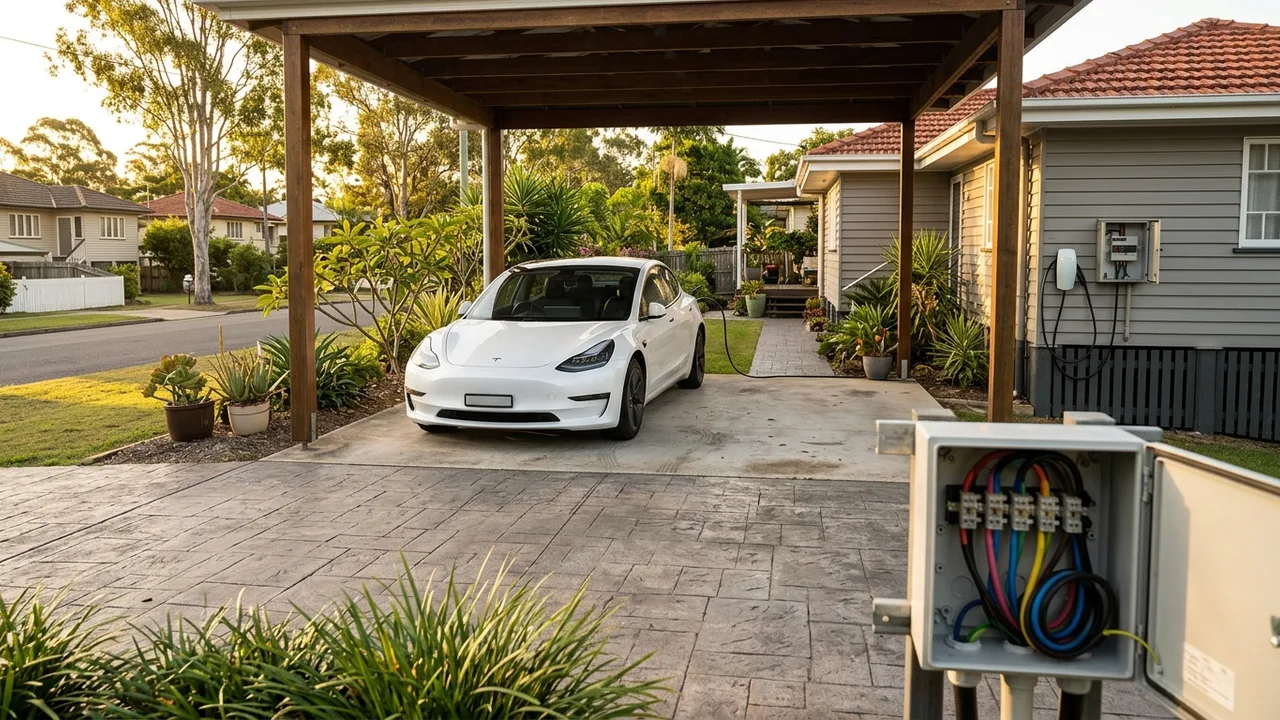
You drive very high daily kilometres. If you regularly drive 150 km or more per day and your only charging opportunity is overnight, a single-phase charger may not fully replenish the battery before your morning departure. Three-phase closes that gap quickly. This is uncommon for most suburban Brisbane commuters but very relevant for people running a business vehicle from home.
Your car accepts 11 kW or 22 kW AC charging. If your onboard charger supports it, three-phase means you can top up 60-80% of a large battery in 2-3 hours. That is useful if you charge at odd hours, share one car among several drivers, or want flexibility.
You are adding solar and planning smart charging. A three-phase charger combined with a solar setup and a smart load-balancing controller can shift the bulk of your charging to solar-generation hours. If you have a large north-facing roof (common in newer estates around Albany Creek and Ferny Grove) and a system above 6.6 kW, the maths can work in your favour over 5-7 years.
You are building or heavily renovating. If Energex is already attending your property for a new connection or major upgrade, the incremental cost of going three-phase from the start is lower. That is the right time to make the call.
You are planning to add a second EV. Two cars, two chargers, two circuits. Three-phase with load management handles this more cleanly than two single-phase circuits competing on the same board.
What single-phase handles just fine (which is most people)
The average Brisbane driver covers 30-50 km per day. A 7.2 kW single-phase charger replenishes roughly 40-45 km of range per hour of charging. Plug in when you get home at 6 pm, and most EVs are full by 10 pm.
For this majority use case, a standard Level 2 single-phase charger installed on a dedicated 32A circuit is the right tool. It is simpler, cheaper, and available to every home regardless of whether Energex has three-phase infrastructure running to your street (not everywhere in Brisbane's older suburban grid does).
If your switchboard needs upgrading to safely carry the charger load, that job is typically $600 to $1,200 on top of the charger installation. Still well inside the $1,800 to $4,500 range for most residential jobs we handle in this area.
The honest recommendation
Check two things before you decide anything. First, confirm whether your home already has three-phase supply (your electrician can tell you in minutes, or look for a three-phase meter or four-pole main switch at your board). Second, confirm your car's onboard AC charger rating.
If you have three-phase at the switchboard already and your car can use 11 kW or more, upgrading to a three-phase charger is a reasonable call. The extra cost over a single-phase unit is modest and the convenience gain is real.
If you would need Energex to bring three-phase to your property from scratch, and your car maxes out at 7.2 kW, the upgrade does not help your charging speed at all. Save the money.
If you are genuinely unsure, get an electrician to inspect your switchboard before committing to anything. We are happy to do that assessment for homes in Carseldine, Bracken Ridge, Banyo, and the surrounding suburbs, and we will tell you straight whether the upgrade makes sense for your setup.
Quick answers