EV Charger Installation guide
Is there a best time of year to get an EV charger installed in South East Queensland?
The short answer: any time works, but some times work better
There is no single "best" month to book an EV charger installation in South East Queensland. Your car needs charging from day one, and a licensed electrician can safely complete the work in any season. That said, a few practical factors, including summer storms, solar feed-in timing, electrician availability, and switchboard considerations, do make some windows more straightforward than others.
Here is what is worth knowing before you pick up the phone.
How SEQ's weather affects the installation itself
South East Queensland does not have the extreme winters that make outdoor electrical work genuinely difficult in other parts of Australia. What it does have is a wet season that runs roughly November through March, with afternoon thunderstorms that can shut down outdoor work for hours at a time.
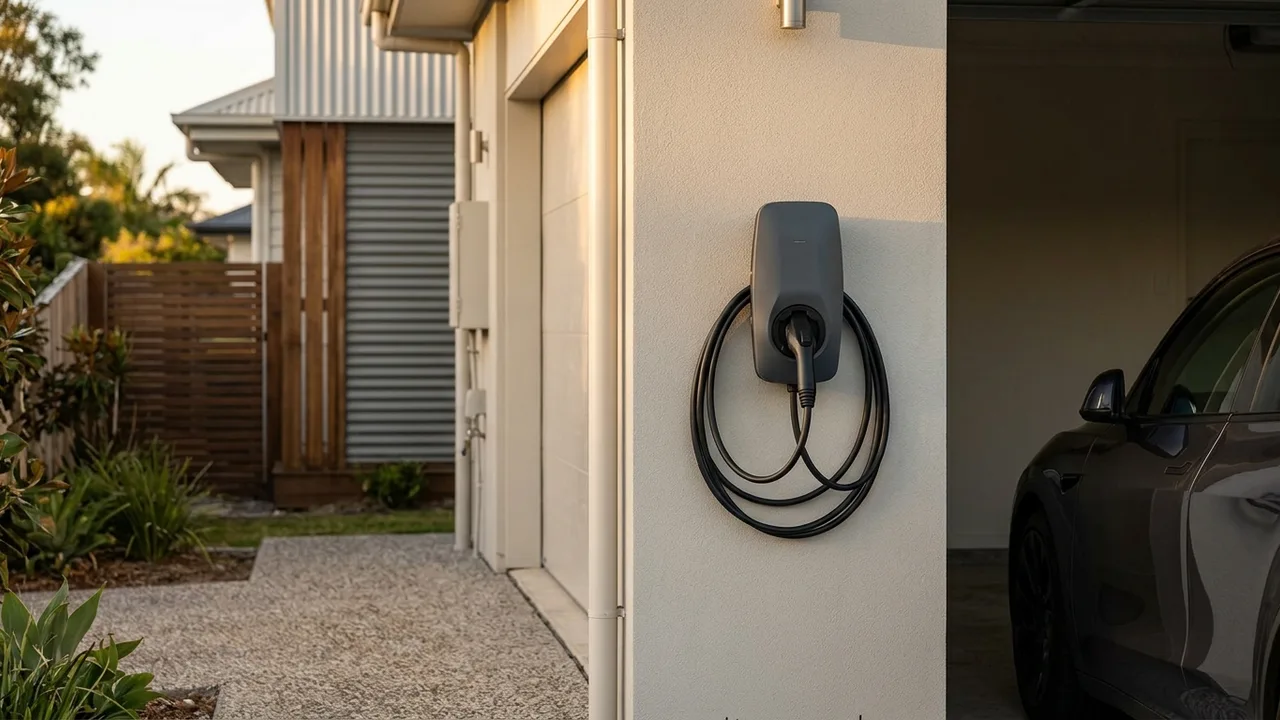
For most home installations in Bracken Ridge, Carseldine, Albany Creek, and neighbouring suburbs, the charger itself mounts on an interior garage wall or undercover carport. That limits weather exposure on the day. The conduit run from your switchboard to the charger, however, may pass through an exterior wall or along an external soffit, and a drenching downpour can delay that portion of the job.
The practical upshot is not "avoid summer" but rather "book a morning start in summer." Afternoon storms typically build after 1 pm. An early start gives the crew time to complete the outdoor cable run before the sky decides to do something inconvenient.
Winter (June to August) is genuinely comfortable for installation work in SEQ. Days are dry, mild, and long enough that there is no pressure to rush. If you are not in a hurry and flexibility is a priority, the winter window is the low-friction option.
Solar integration and why timing matters more for solar households
If you have rooftop solar or are planning to get it, the timing of your EV charger installation becomes a more interesting question.
Queensland's solar feed-in tariffs have been declining steadily. As of mid-2025, many retailers are paying somewhere between 5 and 10 cents per kilowatt-hour for excess solar exported to the grid, while import rates remain significantly higher. That spread makes self-consumption, using your own solar to charge your car rather than sending it to the grid and buying power back at night, genuinely worthwhile.
Installing your EV charger and solar system at the same time, or at least planning for integration from the outset, means the electrician can run a single coordinated cable route, select a charger that is compatible with your inverter's load-management outputs, and size any switchboard upgrade to cover both loads in one go. Doing them separately usually costs more in labour and occasionally requires reworking conduit runs.
If you already have solar, the best time to install a charger is before summer's peak generation months (October to February). That way you capture a full season of high-output midday charging rather than commissioning the system in autumn and waiting nine months to see the benefit. For households in Ferny Grove or Bald Hills with north-facing roof space generating strong output through spring and summer, getting the charger in by October is a reasonable target.
Electrician availability and lead times in Brisbane's northern suburbs
This is the factor most people do not think about until they are waiting three weeks for a quote.
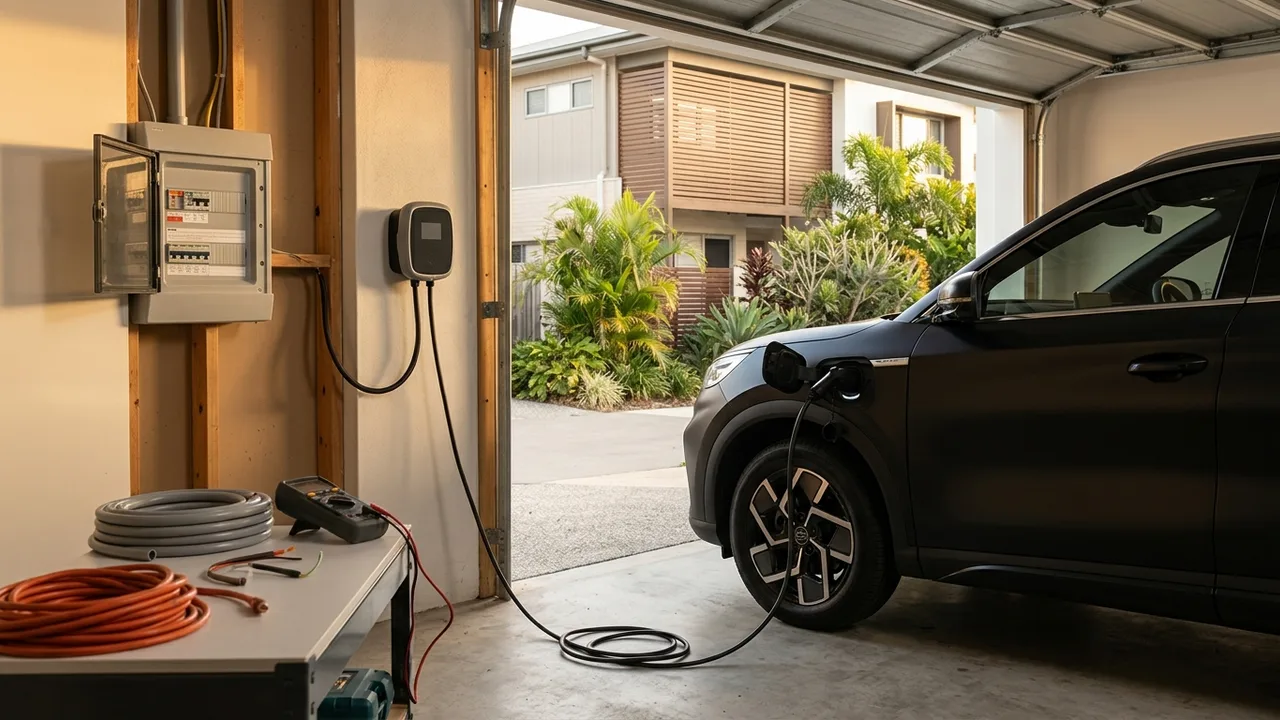
Brisbane's building and renovation market tends to surge after the Easter long weekend and again in September and October. Those are the months when people have come back from holidays, decided to do something about the house, and are booking trades all at once. EV charger installations are a smaller niche than general electrical work, but the same electricians who do switchboard upgrades and new circuits are also quoting on renovations, so the indirect pressure on availability is real.
January and February are often quieter for booking purposes, partly because the school holiday and Christmas energy has dissipated. If you are happy to organise the install during late summer, you may find faster turnaround on quotes and more flexibility on start dates. The weather trade-off mentioned above applies, but it is manageable.
Mid-year (May to July) is another reliable window. School terms are settled, the renovation rush has not yet hit, and the dry mild weather means no scheduling pressure from storms. In our experience covering suburbs from Sandgate and Brighton in the east through to Ferny Grove in the west, June and July bookings tend to move from quote to install with the least friction.
Switchboard upgrades and why they should come first
A significant proportion of homes in Carseldine, Banyo, Boondall, and surrounding northern Brisbane suburbs were built in the 1970s through 1990s. Many still have older switchboards, some with ceramic fuse carriers rather than modern circuit breakers, that are not rated for the continuous load of a Level 2 EV charger running at 7.2 kilowatts for several hours overnight.
A switchboard upgrade is not optional if your existing board cannot safely carry a dedicated 32-amp circuit. The upgrade itself takes a full day and typically adds $800 to $2,000 to the project cost depending on the board configuration and whether a metering update is required by Energex.
The reason this is relevant to timing is that switchboard upgrade jobs take longer to schedule than a straight charger install. The upgrade needs a metering disconnect organised with Energex, which in SEQ typically requires a few business days notice. Book during a busy period and you may be waiting on Energex scheduling rather than the electrician.
Planning ahead by four to six weeks, rather than calling the week you take delivery of your EV, keeps the process smooth regardless of season.
New EV purchase timing and the case for planning ahead
Car dealerships in Brisbane report that EV deliveries are often clustered around end of financial year (June) and the December-January period when manufacturer stock arrives. If you are picking up your car in one of those windows, you are joining a small queue of other new EV owners all wanting chargers installed around the same time.
Booking your electrical assessment before your car arrives is a sensible move. The assessment visit, where an electrician checks your switchboard, measures the cable run, confirms whether you need a three-phase supply upgrade, and gives you a firm quote, takes about 30 minutes and costs nothing in most cases. Having that done three or four weeks before delivery means you can get on the tools the week your car arrives rather than charging on a 10-amp extension lead from the laundry for a fortnight.
A practical recommendation
If you are buying an EV in the next three to six months, now is the right time to book an assessment. The actual installation timing matters less than getting the preliminary work, assessing your switchboard, confirming cable routes, and locking in a quote, done before your car lands.
If you are planning further ahead and have flexibility, aim for late autumn to mid-winter (April to July) for the most straightforward booking experience in the Brisbane northside and Moreton Bay fringe area. The weather cooperates, trades are more available, and if you have solar, you will still have plenty of generation ahead of you for the spring-summer peak.
The one thing worth avoiding is leaving the booking until the week of delivery. Level 2 charger installation is not a same-week job once switchboard or metering work is involved. Give yourself at least two to three weeks, ideally four to six if your switchboard needs attention.
If you want to talk through what your specific house and suburb require, we are happy to have that conversation without any obligation.
Quick answers