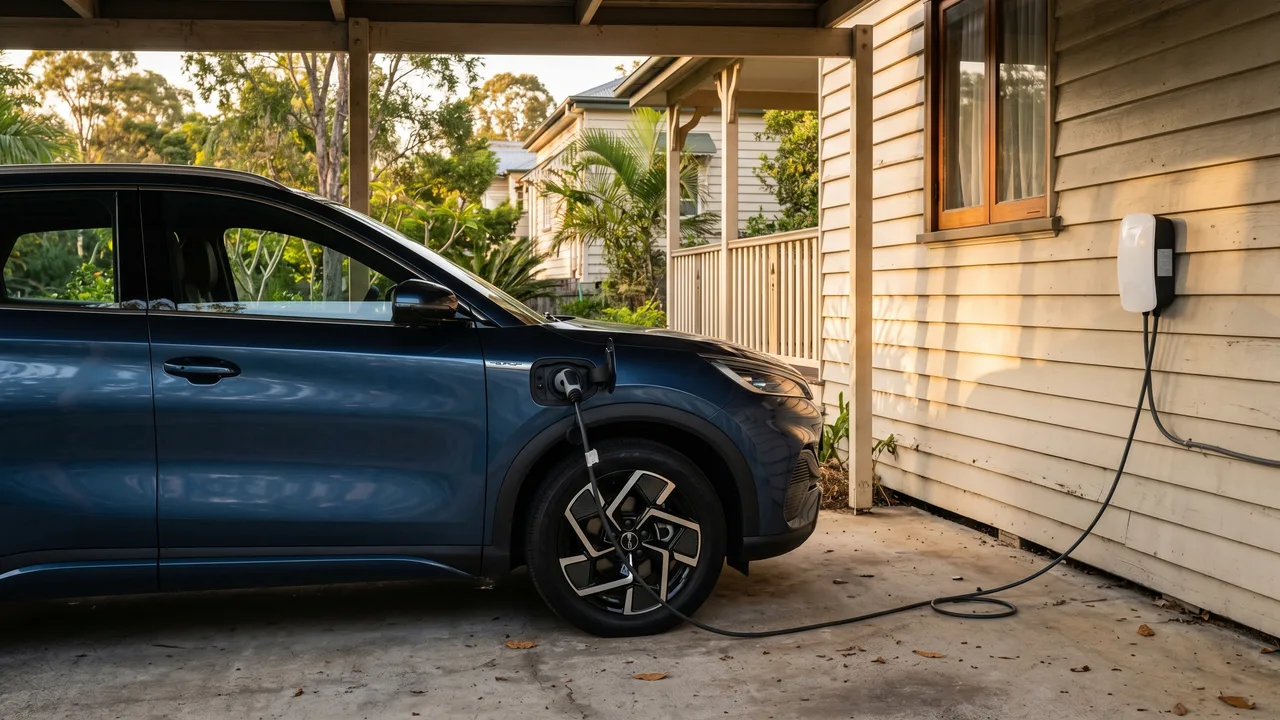
EV Charger Installation guide
Will a home wall charger work with any EV sold in Australia?
The short answer: almost certainly yes, but the connector is only half the story
For the vast majority of EVs sold new in Australia right now, a standard home wall charger will work. Every passenger EV currently available through an Australian dealership accepts AC charging via a Type 2 connector, which is what virtually all residential wall chargers use. So if you've just bought a BYD Atto 3, a Tesla Model Y, a Hyundai IONIQ 6, a Kia EV6, or any of the other models sitting on local lots, a wall-mounted Level 2 charger will charge it at home without any adaptor gymnastics.
That said, "will it work" and "will it work well for your situation" are two different questions. Connector compatibility is the easy part. The harder questions involve your switchboard, your home's wiring, how fast you actually need to charge, and whether your car's onboard charger can even accept the full power a wall unit can offer.
What "Level 2 home charging" actually means
When electricians and EV owners talk about a home wall charger, they mean a dedicated AC charging unit, typically rated between 7.2 kW and 22 kW, wired directly to your switchboard. This is distinct from plugging into a regular 10-amp GPO (a standard powerpoint), which technically charges your car but very slowly and on a circuit that was never designed for an eight-plus hour continuous load.
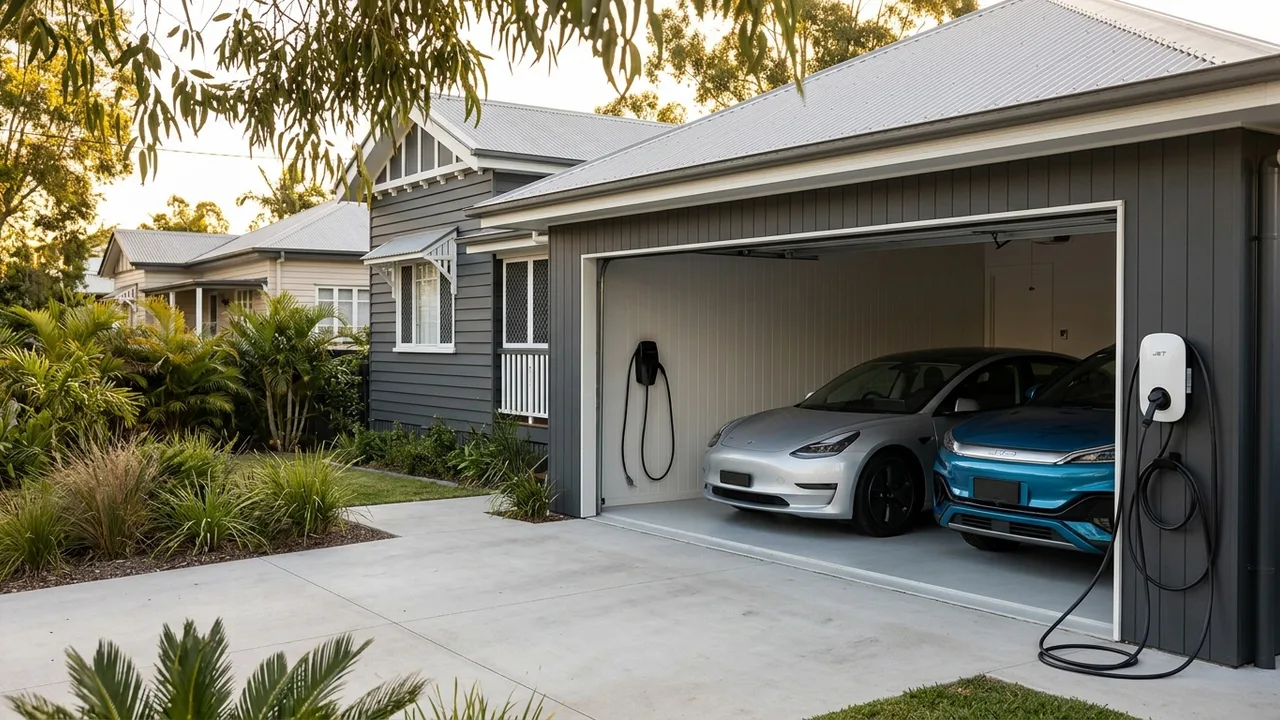
A Level 2 charger runs on a dedicated 32-amp circuit. In most Brisbane homes, that means single-phase power, giving you roughly 7.2 kW of charge rate. Three-phase homes can go higher, up to 11 kW or 22 kW depending on the charger and the car. The hardware bolts to a wall in your garage or carport and connects to your car via a tethered or socketed Type 2 cable.
The connector standard matters because Australia, unlike the US, standardised on Type 2 (also called Mennekes) for AC home charging. Every current passenger EV sold new here uses Type 2 for AC. If you're looking at a used import, a light commercial EV, or an older model, it's worth double-checking, but for anything bought from an Australian dealer in the last three or four years, Type 2 is the standard.
The part most people overlook: your car's onboard charger
Here's something the spec sheets don't always make obvious. The wall charger doesn't directly fill your battery. It delivers AC power to the car's onboard charger (OBC), which converts it to DC and manages the charge going into the battery pack. The OBC has its own maximum input rating, and that rating varies by model.
A few examples, roughly speaking:
- Many entry-level EVs have a 7.2 kW OBC. A 7.2 kW wall charger is a perfect match.
- Some mid-range models, like certain Kia and Hyundai variants, accept 11 kW AC.
- Higher-spec models can accept up to 22 kW AC.
- A handful of older or smaller EVs cap out at 3.6 kW or 6.6 kW.
What this means practically: if you install a 22 kW three-phase wall charger but your car's OBC maxes out at 7.2 kW, the charger will throttle down to 7.2 kW automatically. The charger won't damage your car. You just won't see the faster speeds unless you upgrade your vehicle at some point. It's worth knowing your car's OBC rating before deciding whether to spend extra on three-phase installation.
Switchboard and wiring: the Brisbane-specific reality
Connector compatibility and charge rate are the car's side of the equation. The house side is where most of the variation sits, and where older Brisbane housing stock introduces some genuine complications.
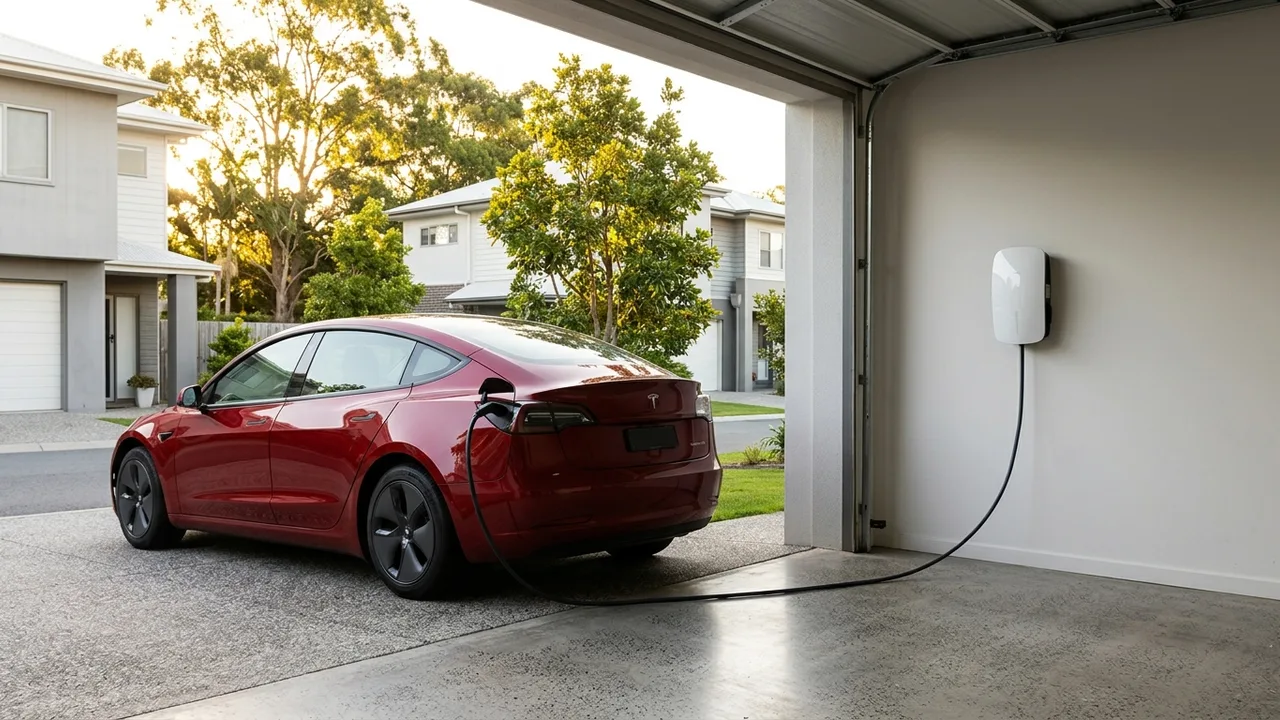
A lot of homes in the suburbs we service, including Carseldine, Albany Creek, Bracken Ridge, and Ferny Grove, were built from the 1970s through the early 2000s. Many of those switchboards are single-phase, carry older ceramic fuse technology, and weren't designed with a 32-amp continuous load in mind. Before a wall charger can be safely installed, the switchboard often needs to be assessed and, in a fair number of cases, upgraded to a modern circuit breaker panel with a dedicated EV circuit.
This isn't a scare tactic. It's just the reality of adding a significant new load to older infrastructure. A switchboard upgrade typically adds $800 to $1,500 to the project depending on the scope, and it's work that has to be done by a licensed electrician. In Queensland, installing an EV charger on a residential property is notifiable work under electrical safety legislation, which means it needs to be carried out and certified by a licensed contractor.
Homes in Sandgate, Brighton, and parts of Banyo closer to the bay sometimes run into a second issue: salt-air corrosion. Older switchboards and wiring in those areas can show deterioration that might not be obvious until a licensed electrician opens the panel. It's worth factoring that in if your home is within a few kilometres of the waterfront.
Single-phase vs three-phase: do you actually need three-phase?
This comes up often, and the honest answer is: most households don't need three-phase EV charging.
If you drive a typical passenger car, park at home overnight, and cover 60 to 150 km a day (which covers the vast majority of commuters in Brisbane's northern suburbs), a 7.2 kW single-phase charger will fully replenish a 60-80 kWh battery in eight to eleven hours. Overnight charging handles that comfortably.
Three-phase charging starts making practical sense if:
- You have a large-battery vehicle (100 kWh or more) and regularly need a fast top-up during the day.
- Your car actually accepts 11 kW or 22 kW AC (check the spec sheet).
- Your home already has three-phase power connected and you want to make use of it.
- You're running two EVs from the same household and want more flexibility.
If your home doesn't currently have three-phase power, connecting it involves a request to Energex and additional infrastructure cost. That's not always a sensible investment just for EV charging unless your home has other reasons to want the extra capacity.
Solar integration: worth thinking about from the start
If you have rooftop solar, or you're planning to get it, it's worth considering solar-integrated charging from the beginning rather than retrofitting later. Some wall charger models can be set to charge preferentially when your solar system is generating surplus power, effectively letting you run your car on sunlight rather than grid power.
In practice, pairing a solar system with a smart EV charger in a Brisbane home often requires a compatible charger model and sometimes a solar energy meter or CT clamp to be installed alongside it. It adds a small amount of complexity and cost upfront, but can meaningfully reduce charging costs over time, especially with Brisbane's strong solar resource.
If you're in Albany Creek, Carseldine, or Bald Hills and already running a decent-sized solar system, this is a conversation worth having before you commit to a specific charger brand.
A sensible way to approach the decision
Before you buy a charger or book an installation, it's worth getting three things clear:
- What is your car's OBC rating? Check the official spec sheet or the manufacturer's website. This tells you the maximum AC charge rate your vehicle can actually use.
- What power supply does your home have? Single-phase is the norm in most residential Brisbane streets, but it's worth confirming, especially if you're in a newer estate or a property with a large shed or workshop that may have had three-phase connected.
- When was your switchboard last looked at? If the answer is "never" or "not since the previous owner", an inspection before installation is a sensible step.
A good installation quote should include a switchboard assessment, not just a price for bolting a box to your wall. If you're getting quotes, ask specifically whether the scope covers checking the switchboard and whether a dedicated circuit is included. Typical complete installations in the Brisbane area run from around $1,800 to $4,500 depending on cable runs, switchboard condition, and the charger specified.
The compatibility question has a simple answer. The installation question takes a bit more thought. Both are worth getting right before the car is sitting in the driveway waiting to charge.
If you'd like a straight answer about what your specific home and vehicle would need, we're happy to have that conversation. No obligation, just a practical assessment.
Quick answers